Lesson 1 The Power of Stigma: Beyond the label
 Video: “We Can Break the Stigma” [2:17]
What is Stigma? How does it impact perceptions about mental health?
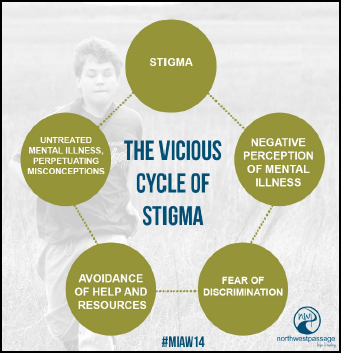
Stigma about mental health happens when someone views a person in a negative way just because they have a mental health condition. Some people describe stigma as a feeling of shame or judgment from someone else. Stigma can even come from an internal place, confusing feeling bad with being bad.
Download this informative two-page brief on stigma.
Examples of cultural perspectives about mental health and stigma
 Video: “finding Peace with Mental Illness” [2:48]
Yulanda Ming Blackston, a NAMI In Our Own Voice presenter shares how she found peace with her mental illness while being part of a faith community.
Check your state’s ranking on mental health
Share data from the Snohomish County Health and Well-Being Monitor that was in part created by diverse communities in SnoCo.
Easy Ways How You Can Reduce Stigma
The National Alliance on Mental Illness (NAMI) has some great ideas on ways we all can break stigma around behavioral health challenges.
- Talk openly about mental health. Social media has become a great space for positivity.
- Educate yourself and others – respond to misconceptions or negative comments by sharing facts and experiences.
- Be conscious of language – remind people that words matter.
- Encourage equality between physical and mental illness – draw comparisons to how they would treat someone with cancer or diabetes.
- Be honest about treatment – normalize mental health treatment, just like other health care treatment.
- Show compassion for those with mental illness.
- Choose empowerment over shame.
You must be logged in to post a comment.